
I Studied the World's First RPG Setting. Here's What I Learned...
We have a lot to learn from Dave Arneson.

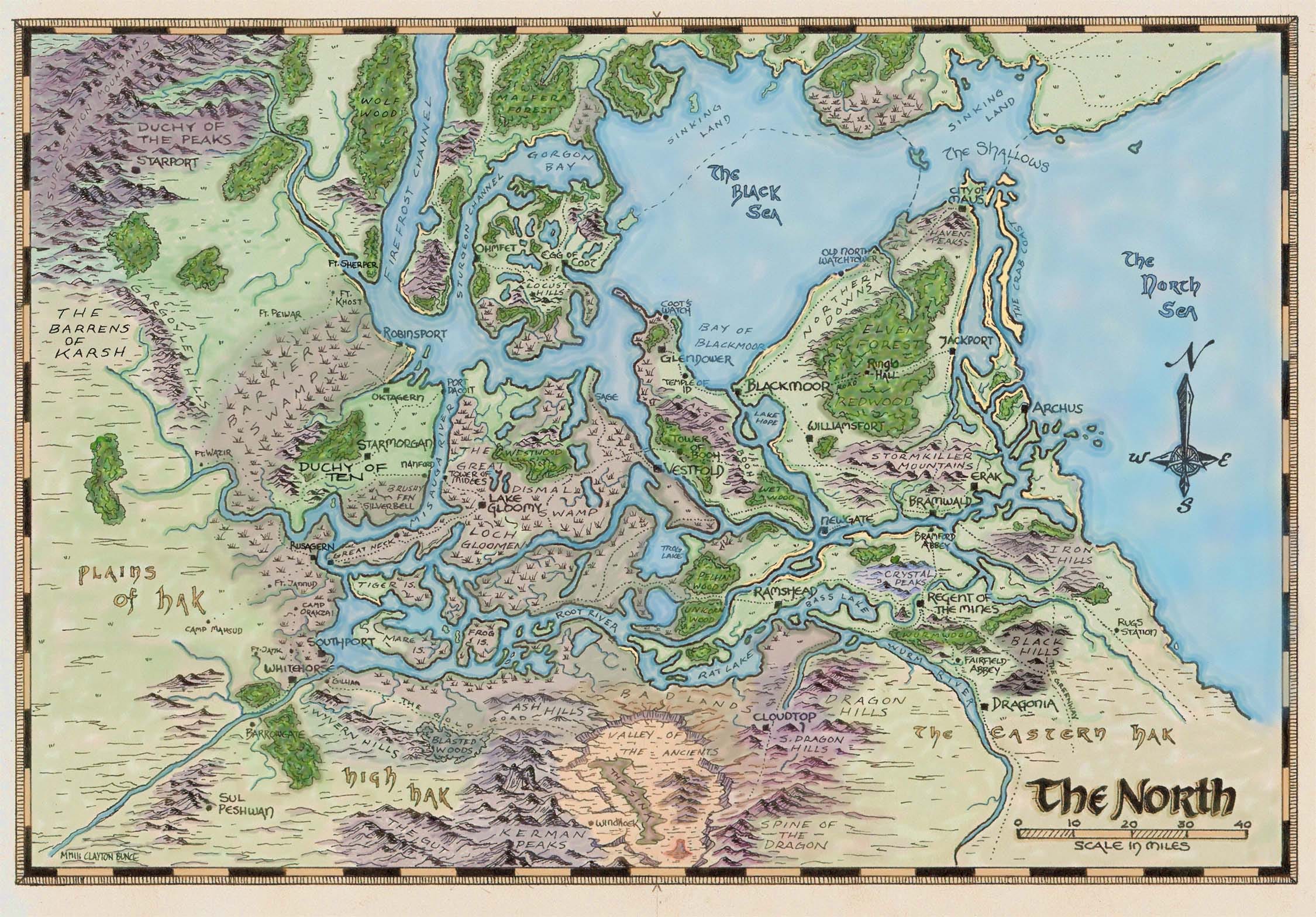
Blackmoor. The word is many things to many people. For many, it's little more than a long-lost name whispered by the greybeards of gaming. For those who were there, it was one of D&D's first official settings along with Greyhawk. And for a choice few, Blackmoor is an ongoing game system and campaign, having gone strong since the 70s and refusing to die even as gargantuan game worlds like Everquest and Ultima have risen and fallen. Without Blackmoor, multi-million dollar empires would never have surfaced. Blizzard Entertainment, Wizards of the Coast, ArenaNet, Riot Games and arguably the Lord of the Rings Cinematic Universe may never have seen the light of day.
In short, Blackmoor is the seed that sprouted into the great tree we now know as the gaming industry.
WHAT IS BLACKMOOR?
To understand Blackmoor, you must first understand the concept of Wargaming. Wargaming is arguably older than chess, but its more contemporary variant was first invented by author H.G. Wells, establishing a long-running connection between SF literature and tabletop games. These wargames most often took the form of period conflicts such as the Revolutionary or Napoleon’s wars, with gaming clubs often specializing in one or the other. And it was one such Napoleonic gaming club that eventually began to experiment with an early version of role-playing, pitting each player as commanders of a squad of soldiers.
It was’’t until one of the club’s members -Dave Arneson – began to experiment with medieval wargaming that things started to take shape. Using the “Chainmail” ruleset of close friend Gary Gygax, Arneson began exploring the idea of playing a single character rather than an army. In this game, characters explored a fantastical world whose signature landmark, Castle Blackmoor, sat atop a labyrinthine dungeon spanning several floors. Arneson soon learned that the dungeon was a hit with his players and began structuring his games around dungeon crawling, slaying monsters and earning treasure.
With the help of Gygax, this game was revised and became the household name we almost know today – Dungeons and Dragons.
WHAT I LEARNED
Going back to the “source material,” a lot of elements stood out to me as a game designer. Perhaps the most striking feature was the small size of the book – depending on the edition we’re talking anything from to 60-88 pages max, much of which is dedicated to tables.
Modern setting books such as Fifth Edition Dungeons and Dragons’ Eberron: Rising from the Last War are over 300 pages long, more than 3 times larger than Blackmoor. Much of the book is spent detailing key NPCs such as the Wicked “Egg of Coot” (a joke at the expense of a curmudgeonly old gamer in the group) and locales such as Castle Blackmoor. The rest is left to the GM’s imagination, much like other early setting such as Judge's Guilds’ Wilderlands of High Fantasy.
This approach works well for several reasons. Experienced gamers will appreciate the creative license these sorts of settings offer, while newer GMs will find such settings less overwhelming than modern supplements.
The tone of old Blackmoor books is also something to note. Certain characters are described as having anti gravity devices and other high tech, the Egg of Coot is arguably of alien origin, and the overall tone, while distinctly medieval (more so even than modern settings) contains more than a slight dash of SF weirdness.
As a fan of turn of the century genre fiction, I really enjoyed these asides. They remind me a bit of the “Weird Wasteland” perk in Fallout, and add a bit of ambiguity to the magic of the world. Is the wizard’s magic crown truly magic, or an alien device from 5,000 years in the future? Contrary to what one might initially thinking this approach is actually closer to classical fantasy than a lot of modern stories’ depiction of magic. In fairy tales like Hans Christian Anderson’s “The Tinderbox,” the eponymous magic item is never explained away or given some Sandersonian magic system or arcane occultism. It simply is, much like what Chesterton describes in The Ethics of Elfland. And in a setting like Blackmoor, a magical item can truly be anything. It’s a wonderful level of simplicity that makes GMing easier.
There’s also a palpable silliness about parts of this setting. Blackmoor’s dungeon has a secret entrance labeled “orc secret entrance,” and anyone who successfully clears it gets a free shirt (no one has claimed the free shirt.) It’s a bit much at time, but levity is a necessary thing in RPGs, given how often the tone can go sideways with a bad die roll.
Going forward, my own house setting will be taking quite a few cues from Blackmoor. Arneson was a genius, and reading his early material really shows how much of a mastery he had over the role-playing concept. The focus on actual medievalism vs the vaguely high-fantasy-swords-and-sorcery fare of later D&D was also of note to me. Certain elements can be streamlined, and I feel the focus on grand armies and large-scale wargame elements might not be of interest to more modern gamers. But looking back, it seems much of what ended up on the cutting room floor might be valuable for those looking to capture the feel of classical literature in their tabletop games – anti-gravity devices and all.